
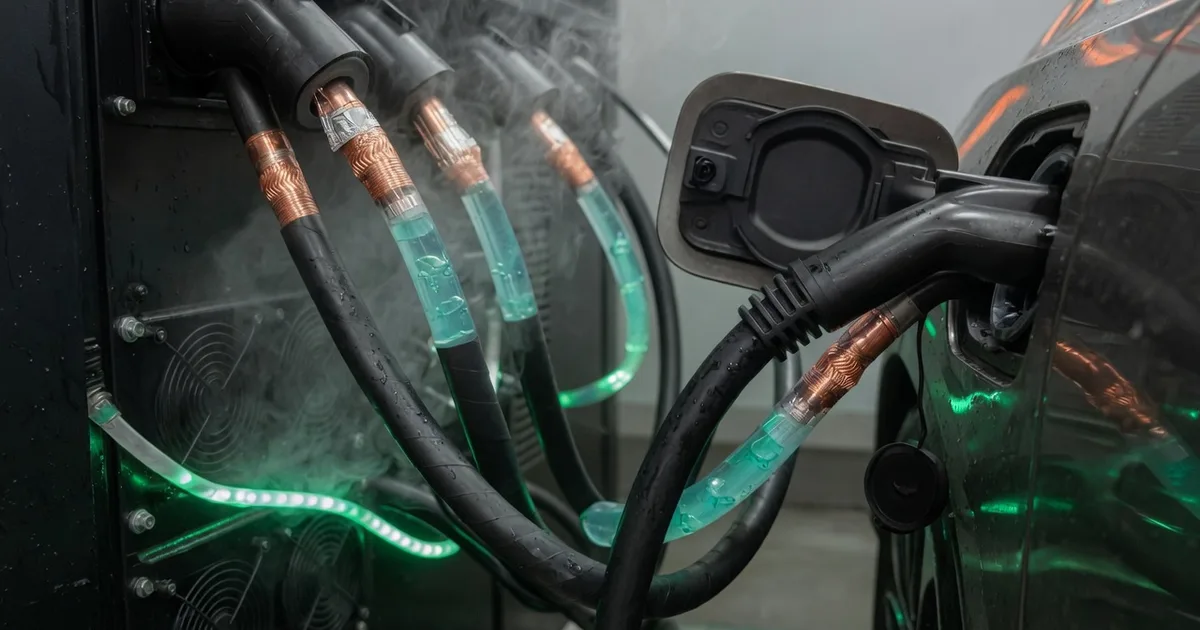
A “150 kW” label is a ceiling, not a promise. Drivers deserve a better explanation than “it depends” when the live graph sits at 40 kW.
This post covers the usual reasons power is lower than the sticker, and how the app should help without blaming the driver for physics.
The usual reasons power is lower
Battery state of charge and temperature
Above roughly 50–80% SOC, most EVs taper hard. Cold batteries also limit charge rate until they are preconditioned. The charger can offer more current than the car will accept.
Shared cabinet power
Two CCS cables on one power module might share 150 kW total. When a second car plugs in, your curve drops. The label on the pole rarely says that clearly.
Cable and connector rating
A cable and inlet pair have their own limits. The weakest link wins. High-power marketing numbers assume the right hardware on both sides.
Site grid and dynamic load balancing
The CPO may derate all units when the site approaches its grid connection limit. That is good grid behavior and bad surprise UX if the app still promises “150 kW.”
Vehicle request
The car’s BMS asks for a certain current. The charger cannot force more than the EV accepts. This is normal — and confusing when the only UI is a single max-power badge.
How the app should help
- Show live kW and a short tip when power is far under the station max (SOC taper, shared bay, etc.).
- Prefer stations with true multi-vehicle power when the agent books a highway stop.
- Surface site notes (“shared power on this bay”) when CPOs publish them.
Honesty here reduces support tickets that are not bugs — and keeps trust when the session is actually fine.
Operator tip
Publish accurate max power per EVSE, not only per site. Misleading labels create support load for every eMSP on the network, not only yours.
What’s next
For sessions that will not start or stop at all, see Charger won’t start and Stuck cable .